
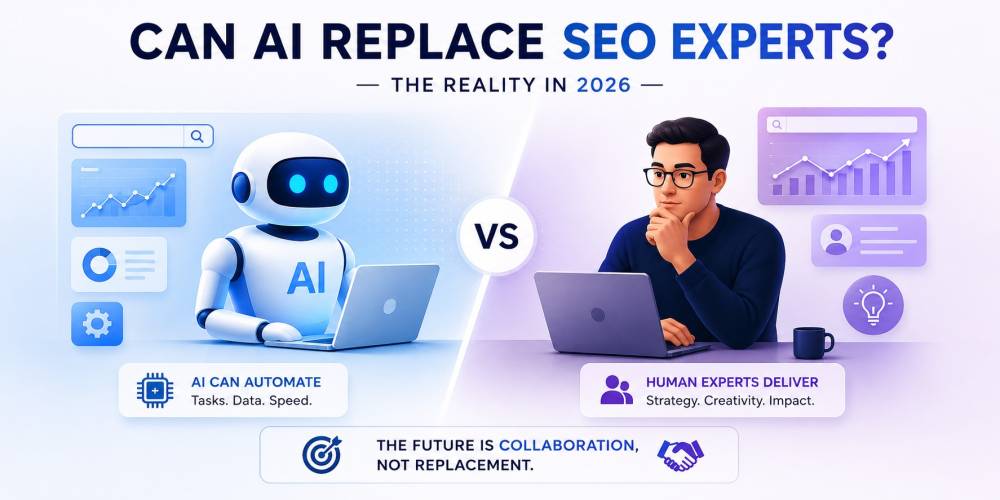
AI is changing the digital marketing industry faster than
ever before. Programs such as ChatGPT, Gemini, Claude and other automated SEO
tools can create content, do keyword research, evaluate websites and suggest
optimization techniques all in just a few minutes. As AI continues to grow, one
of the most commonly asked questions by marketers and business owners now is
will AI take over the jobs of SEO experts in future?
The answer is, Artificial Intelligence (AI) has altered how Search Engine
Optimization (SEO) experts do their job. While AI will not replace SEO experts,
by using AI, it allows SEO experts to do more work faster and automate the
completion of many tasks that they used to do by manually. Marketers also
utilize AI to help them make more informed data-driven decisions. For SEO
professionals working in this area, it is important to know where AI performs
well and where you will still need to believe on your own professional
experience.
The Rise of AI in SEO
SEO has always involved about analysis data, identifying the
user’s needs, creation of content and adjustments based on changes to the
search engine’s algorithm. Artificial Intelligence can be extremely helpful
with large amounts of information, making it efficient for multiple SEO tasks.
Today, AI can help with:
• Keyword research and clustering
• Content generation
• Meta title and description creation
• Technical SEO audits
• Competitor analysis
• Content optimization recommendations
• Internal linking suggestions
• Search intent analysis
• Performance reporting
Tasks that once took hours can now be completed in minutes. This efficiency has led some businesses to wonder whether they still need SEO professionals at all or not.
What AI Does Better Than Humans
1. Data Processing at Scale
AI can analyse thousands of keywords, search trends, backlinks and competitor
pages faster as compare to any human team.
For example, an AI-powered SEO platform can:
• Identify keyword opportunities
• Detect content gaps
• Analyse search patterns
• Generate optimization recommendations
This capability saves significant time and helps businesses to uncover
opportunities that might otherwise be missed.
2. Content Creation Assistance
AI tools can quickly create:
• Blog outlines
• Article drafts
• Product descriptions
• FAQs
• Meta descriptions
• Social media captions
For businesses publishing large amounts of content, AI can accelerate
production and reduce costs.
3. Technical SEO Auditing
Modern AI-driven SEO tools can automatically detect:
• Broken links
• Duplicate content
• Missing meta tags
• Crawl errors
• Indexing issues
• Site speed concerns
These automated audits allow SEO professionals to focus on solving problems
rather than simply identifying them.
4. Automation of Repetitive Tasks
Many routine SEO activities can now be automated, including:
• Rank tracking
• Reporting
• Keyword monitoring
• Content optimization suggestions
• Data analysis
This increases efficiency and reduces manual work.
Where AI Falls Short
Despite its impressive capabilities, AI still has significant limitations.
1. Lack of Strategic Thinking
SEO is not only simply about keywords and rankings.
Successful SEO strategies require understanding:
• Business goals
• Market conditions
• Customer behavior
• Brand positioning
• Competitive landscapes
While Artificial Intelligence is able to give you recommendations but cannot
give you a complete understanding of your company's individuality or assist you
in creating long-term business strategies like experienced SEOs are able to do.
2. Limited Understanding of Brand Voice
AI-created content generally sounds very similar to the AI (because of AI using
previously established patterns).
Human SEO experts understand:
• Brand personality
• Audience preferences
• Emotional triggers
• Industry-specific messaging
These elements are necessary for creating content that connects with users and
builds trust.
3. Difficulty Handling Complex Decisions
SEO often involves decisions that require experience and judgment.
Examples include:
• Site migration planning
• Recovery from algorithm penalties
• International SEO strategies
• Competitive positioning
• Content prioritization
These situations require critical thinking that AI cannot fully replicate.
4. Search Engine Algorithms Prioritize Quality
Search engines continue to focus on:
• Expertise
• Experience
• Authority
• Trustworthiness
Publishing AI-generated content doesn't guarantee to rank on top. Sometimes,
AI-created stuff without human checks is bland and unoriginal, it misses the
mark on real insight and trustworthiness.
Why Human SEO Experts Remain Essential
Understanding User Intent
SEO is ultimately about helping people find useful information.
Human experts understand:
• Customer pain points
• Search motivations
• Buying behavior
• Audience psychology
AI can analyse search patterns but often struggles to interpret different human
behavior accurately.
Creativity and Innovation
The best SEO campaigns often contain:
• Unique content ideas
• Creative link-building strategies
• Innovative marketing campaigns
• Original research
Creativity remains one of the strongest advantages humans have over AI.
Relationship Building
Off-page SEO frequently depends on:
• Outreach campaigns
• Digital PR
• Influencer collaborations
• Partnership development
These activities require communication skills and relationship management that
AI cannot done effectively.
Adapting to Change
Search engines continually update their algorithms.
Experienced SEO professionals:
• Monitor industry trends
• Test new strategies
• Interpret ranking fluctuations
• Adjust campaigns accordingly
AI believes on historical data and may struggle when sudden changes are
occurred.
How AI is Changing SEO Jobs
Instead of reduce SEO jobs, AI is transforming them.
Modern SEO professionals increasingly focus on:
• Strategy development
• AI tool management
• Content quality control
• User experience optimization
• Data interpretation
• Business growth initiatives
Experts can spend more time on important activities since many routine jobs are
being automated.
The future SEO specialist will likely collaborate with AI as opposed to being
in competition against it.
The Most Effective Approach: Human + AI
The strongest SEO results usually come from combining both
human expertise with AI capabilities not alone.
AI can handle:
• Data analysis
• Research
• Automation
• Draft creation
Humans can handle:
• Strategy
• Creativity
• Decision-making
• Brand development
• Relationship building
This partnership creates a more efficient and effective SEO process than either
humans or AI could achieve alone.
The Future of SEO Careers
As AI continues to develop, SEO professionals need to
develop new skills according to changing time.
Important future skills include:
• AI-assisted content workflows
• Data analysis
• Technical SEO
• User experience optimization
• Search intent research
• Digital strategy
• AI prompt engineering
Those who learn how to leverage AI effectively will remain highly valuable in
the digital marketing industry.
Conclusion
SEO is currently being transformed by AI through an increase
of automation in repetitive tasks as well as quicker research and more
effective productivity. AI will not completely remove the need for SEO
specialists because optimization needs advanced skill sets such as strategy
development, creativity, critical thinking, business acumen and human judgment
to achieve successful outcomes from an optimization perspective.
AI helps SEO professionals be more effective by automating routine tasks and
allowing them to utilize technology to work more wisely and obtain better
results. Therefore, businesses that utilize both AI technologies and SEO
experts together can advance their business more effectively in a rapidly
changing competitive environment.
The future of SEO is to be viewed as an integration of AI with humans rather
than AI vs humans, with both parties benefiting from each other's strength to
develop a more effective search marketing strategy.
Author Bio:
Sadhana Patidar is a Senior SEO Executive at Technogaze Solutions with more than five years of experience in technical, on-page, off-page, and local campaigns. She holds expertise in optimizing websites to increase visibility, correcting any technical problems, and driving organic traffic through data-informed methodologies. Sadhana is passionate about realistic SEO strategies that produce ongoing results, after combining data elements with practical tactics of optimization. Her expertise includes detailed audits, optimizing content, blog writing, and website content writing, developing link-building campaigns that boost online presence. Passionate about learning and development, Sadhana actively looks for current search engine optimization trends to ensure each engagement is reflective of the best search engine optimizations and competes well across digital platforms.