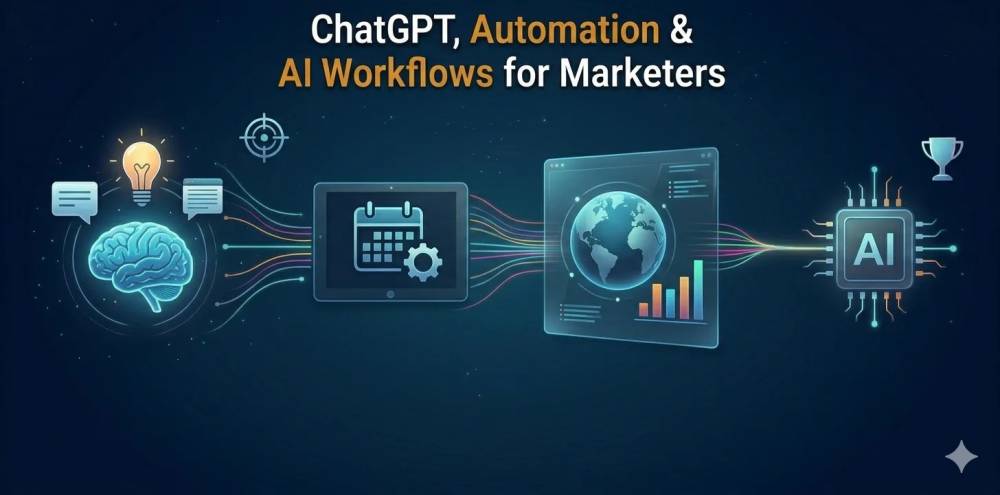
ChatGPT, Automation & AI Workflows for Marketers
If you’re learning digital marketing today, you’ve probably heard one thing again and again learn AI tools.
But after that, most students get confused.
You try ChatGPT, generate some content, maybe write a caption or two and then you’re stuck. You don’t know what to do next or how it actually fits into real marketing work.
That’s because learning tools is not enough. What really matters is understanding how to use them in a workflow.
In real jobs, marketers don’t just use one tool. They follow a process where each step connects to the next. That’s exactly what AI workflows help you build.
What is an AI Workflow?
An AI workflow is simply a process where different tasks are connected and supported by tools.
Instead of doing everything manually, you create a system:
• Idea → Content → Design → Publish → Lead → Follow-up
Each step is supported by AI tools to save time and improve accuracy.
As a student, understanding this flow is more important than learning random tools.
Step 1: Using ChatGPT Properly
Most beginners use ChatGPT in a very basic way. They ask it to write full content in one go.
That’s not how you learn.
Instead, break it into steps:
1. Ask for topic ideas
2. Select one topic
3. Generate an outline
4. Expand each section
5. Edit in your own words
This way, you understand structure not just output.
Where you can use ChatGPT:
• Blog writing
• Social media captions
• Ad copy
• Email drafts
Always remember editing is your job. That’s where your skill develops.
Step 2: Build a Content Workflow
In real work content is not created randomly. It follows a process.
Simple student workflow:
1. Use ChatGPT for ideas
2. Write content
3. Create visuals using Canva
4. Schedule posts
Tools you can use:
• ChatGPT (content)
• Canva (design)
• Meta Business Suite (posting)
This is the kind of workflow used in internships and entry-level roles.
Step 3: Understanding Automation
Automation sounds technical but it’s actually simple.
It means setting up a system once and letting it run automatically.
Example:
• A user fills a form
• They instantly receive an email
No manual work needed.
Tools for beginners:
• Mailchimp
• Zoho CRM
• Google Forms + email setup
Learning automation gives you an advantage because most beginners don’t know this part.
Step 4: How AI Works in Ads
You don’t need to master ads immediately, but you should understand how AI is used.
Platforms like Google Ads and Facebook Ads already use AI to:
• Show ads to the right audience
• Optimize budget
• Improve performance
Your role:
• Write better ad copy (use ChatGPT)
• Test different versions
• Understand results
This is how campaigns improve over time.
Step 5: SEO with AI Support
SEO becomes easier when you combine it with AI.
Student approach:
1. Understand topic using ChatGPT
2. Find related keywords
3. Structure content properly
4. Improve readability
Instead of memorizing concepts, you learn by doing.
Step 6: Create a Mini Project
The best way to learn is to apply.
Example project:
• Choose a niche
• Create 5–10 posts using ChatGPT
• Design creatives
• Publish on social media
• Track engagement
This gives you real experience, not just theory.
Step 7: Connecting Everything (Workflow Thinking)
Once you understand basics, connect them:
• Content → Social Post → Lead Form → Automated Email → Follow-up
This is how actual marketing works.
Not separate tools, connected systems.
Common Mistakes Students Make
Most learners struggle because they:
• Copy-paste AI content
• Don’t practice regularly
• Focus only on tools
• Skip real projects
This is why they feel lost even after learning.
Practical Learning Approach
The real difference comes from how you learn.
TechnoGaze focuses on helping students understand how ChatGPT, automation and AI workflows are used in real campaigns. Instead of only theory, the main focus on execution and hands-on practice during training session.
For learners exploring digital marketing courses in Bhopal, it’s important to choose training that includes real-world application, not just tool explanations.
Choosing the Right Training
A strong digital marketing training in Bhopal should include:
• Practical assignments
• Live project work
• AI tools usage
• Workflow-based learning
This ensures you are ready for actual work, not just exams or certificates.
Moving to Advanced Level
After basics, the next step is deeper understanding.
Advance Digital Marketing Training focuses on:
• Campaign execution
• Automation systems
• Data analysis
• Performance improvement
This is where you move from beginner to job-ready.
TechnoGaze supports this transition by focusing on real implementation, helping students build confidence through practical exposure.
Final Thought
AI tools are easy to access. Anyone can use them.
But real skill comes from:
• Knowing where to use them
• Connecting tasks into workflows
• Practicing consistently
If you focus on this, you won’t just learn digital marketing you’ll be ready to work on real projects.
And that’s what actually matters.
Sadhana Patidar is a Senior SEO Executive at Technogaze Solutions with more than five years of experience in technical, on-page, off-page, and local campaigns. She holds expertise in optimizing websites to increase visibility, correcting any technical problems, and driving organic traffic through data-informed methodologies. Sadhana is passionate about realistic SEO strategies that produce ongoing results, after combining data elements with practical tactics of optimization. Her expertise includes detailed audits, optimizing content, blog writing, and website content writing, developing link-building campaigns that boost online presence. Passionate about learning and development, Sadhana actively looks for current search engine optimization trends to ensure each engagement is reflective of the best search engine optimizations and competes well across digital platforms.