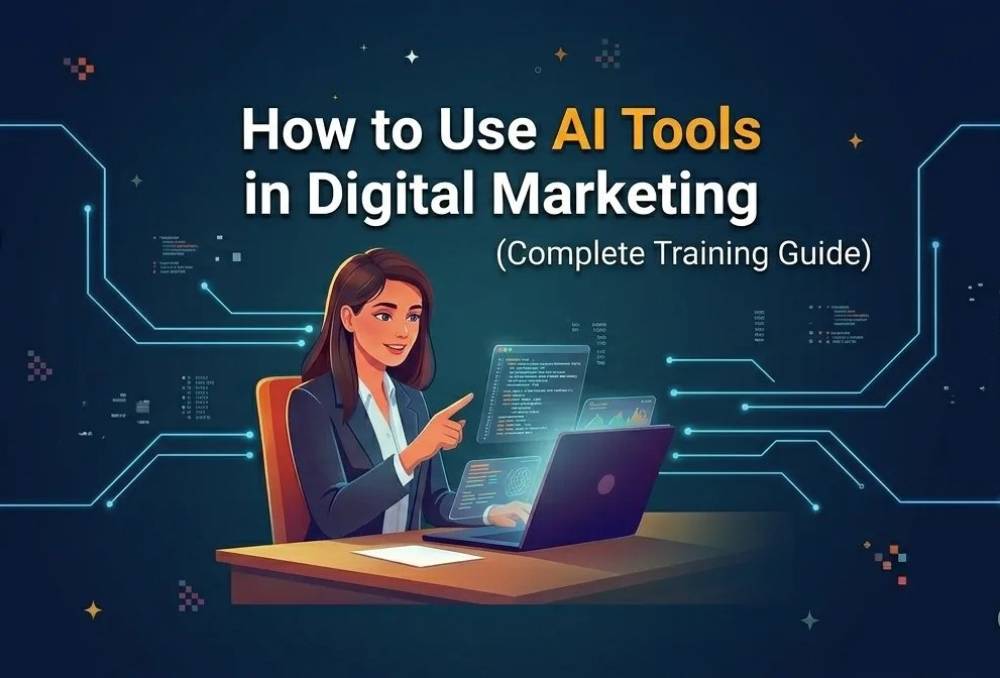
How to Use AI Tools in Digital Marketing (Complete Training Guide)
AI in digital marketing is not about replacing work. It’s about reducing manual effort and making decisions based on data instead of guesswork.
Most people talk about AI in a very general way “use AI for content, use AI for ads.” That doesn’t help. What actually matters is knowing which tools to use, where to use them and how to combine them into a workflow.
This guide focuses on practical usage.
Understanding Where AI Fits in Marketing
Digital marketing has 5 major areas:
• Content
• SEO
• Paid Ads
• Social Media
• Data & Analytics
AI tools work best when applied to specific tasks inside these areas not randomly.
1. AI for Content Creation (Actual Workflow)
Content is not just writing blogs. It includes:
• Website pages
• Ad copy
• Email campaigns
• Social media posts
How AI is actually used:
1. Start with keyword or topic
2. Use AI to generate outline
3. Expand sections into draft
4. Manually refine tone and accuracy
AI tools:
• ChatGPT (content drafting)
• Jasper (marketing copy)
• Copy.ai (ads & short content)
Important:
Raw AI content is rarely publish-ready. It needs editing for:
• Accuracy
• Human tone
• Brand voice
2. AI in SEO (Beyond Keywords)
SEO today is not just keywords it’s about search intent and content structure.
Practical AI usage:
• Generate keyword clusters (not single keywords)
• Analyze competitor content
• Identify missing topics
• Optimize headings (H1, H2, H3)
AI tools:
• Surfer SEO
• SEMrush AI features
• Ahrefs AI suggestions
Example:
Instead of targeting just “real estate marketing,” AI helps you find related terms like:
• property marketing strategies
• real estate lead generation
• online property promotion
Many providers offering digital marketing services use these tools to build structured SEO strategies instead of random blogging.
3. AI in Paid Advertising (Real Use Case)
Ad platforms already use AI internally, but you still need strategy.
Where AI helps:
• Audience targeting (based on behavior)
• Auto-bidding strategies
• Ad variation testing
• Performance prediction
Example workflow:
1. Create 3–4 ad copies using AI
2. Run all versions
3. Let AI optimize based on CTR & conversions
4. Scale best-performing ads
Platforms:
• Google Ads (Smart Bidding)
• Meta Ads (AI targeting)
Without understanding this, businesses sometimes waste budget. That’s why many believe on digital marketing companies for proper campaign setup and optimization.
4. AI in Social Media Marketing
Posting randomly doesn’t work anymore. AI helps you plan and optimize content.
Practical usage:
• Generate content ideas based on trends
• Create captions and hooks
• Suggest hashtags
• Analyze engagement
Tools:
• Predis.ai
• Canva AI
• Hootsuite AI
Real insight:
AI helps with consistency, but creativity still comes from understanding your audience.
5. AI in Email Marketing & Automation
Email is still one of the highest ROI channels when used correctly.
AI helps in:
• Audience segmentation
• Personalized email content
• Subject line optimization
• Send-time optimization
Tools:
• Mailchimp AI
• HubSpot
• ActiveCampaign
Example:
AI can identify:
• Who opens emails frequently
• Who clicks but doesn’t convert
Then automatically send targeted follow-ups.
6. AI for Data Analysis (Most Underrated Use)
Most marketers collect data but don’t use it properly.
AI tools simplify this.
What AI can do:
• Identify which campaign is performing best
• Track user journey
• Predict drop-off points
• Suggest improvements
Tools:
• Google Analytics (GA4 insights)
• Power BI with AI
• Tableau
This removes guesswork from marketing decisions.
7. AI Chatbots for Lead Generation
Speed matters in digital marketing. If you miss a lead, someone else gets it.
AI chatbot use:
• Answer FAQs instantly
• Capture user details
• Qualify leads
• Route leads to sales team
Tools:
• Drift
• Intercom
• Tidio
This ensures 24/7 response without manual effort.
8. Common Mistakes While Using AI
Many beginners misuse AI. Here’s what to avoid:
• Copy-pasting AI content without editing
• Ignoring strategy and believing only on tools
• Using too many tools without purpose
• Not checking accuracy
AI is a support system not a replacement for thinking.
9. How to Learn AI in Digital Marketing (Step-by-Step)
If you’re learning or training, follow this structure:
1. Start with content creation tools
2. Learn keyword research using AI
3. Move to ad campaign optimization
4. Practice automation tools
5. Analyze real campaign data
Hands-on practice is more important than theory.
A structured training approach from TechnoGaze helps learners understand how these tools are used in real campaigns, not just in theory. As a digital marketing institute in Bhopal, TechnoGaze focuses on practical implementation instead of tool-based confusion.
Final Thoughts
AI is not the future of digital marketing it’s already part of it.
But the difference comes from how you use it.
Anyone can access AI tools. Not everyone knows how to apply them correctly.
The real advantage comes from combining:
• AI tools
• Marketing strategy
• Human understanding
That combination is what drives results.
TechnoGaze works on this exact approach using AI where it adds value and human expertise where it matters most.
Sadhana Patidar is a Senior SEO Executive at Technogaze Solutions with more than five years of experience in technical, on-page, off-page, and local campaigns. She holds expertise in optimizing websites to increase visibility, correcting any technical problems, and driving organic traffic through data-informed methodologies. Sadhana is passionate about realistic SEO strategies that produce ongoing results, after combining data elements with practical tactics of optimization. Her expertise includes detailed audits, optimizing content, blog writing, and website content writing, developing link-building campaigns that boost online presence. Passionate about learning and development, Sadhana actively looks for current search engine optimization trends to ensure each engagement is reflective of the best search engine optimizations and competes well across digital platforms.