SEO Basics – Part 2
Introduction
When preparing for a role in SEO, it is important to understand how on-page factors work, as many of interview questions will be based on this. Many interviewers will ask questions about how well you understand these concepts and how well you can apply them in real-life situations. This section by TechnoGaze deals with common SEO marketing interview questions and clear SEO interview question answer, so candidate can gain a good understanding of interview questions for search engine optimization.
What is On-Page SEO?
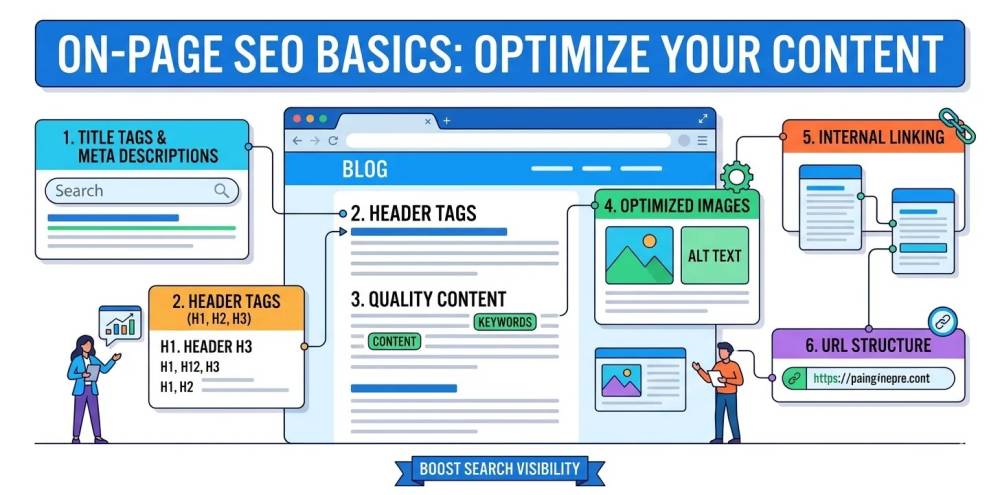
On-Page SEO refers to all the optimizations you do directly on your website pages to make them more search engine-friendly. This helps your website rank higher on search engines like Google. It includes optimizing:
• Content quality (useful, relevant and engaging text)
• Keywords (placement, density and relevance)
• Meta tags (title, description)
• Headings (H1, H2, H3)
• Images (alt text, file size)
• URL structure (clean and descriptive URLs)
• Internal linking (linking to other pages on your site)
Example: If you have a page about “Graphic Design Courses in Bhopal,” on-page SEO ensures your page has the keyword naturally in the title, meta description, headings and content.
What is a meta title?
A meta title is the title of your webpage that appears in search engine results and at the top of a browser tab. It tells both users and search engines what your page is about.
Example:
Graphic Design Courses in Bhopal - Learn & Build Your Creative Career
Best Practices:
• Keep it 50–60 characters
• Include your main keyword
• Make it descriptive and clickable
What is a meta description?
A meta description is a short summary (usually 150–160 characters) of your webpage that appears under the title in search results. It helps searchers understand what your page offers and can improve click-through rates for Keywords - best graphic design course in Bhopal.
Example:
Join the best graphic design course in Bhopal. Learn from experienced teachers and get 100% placement support.
Best Practices:
• Include target keywords naturally
• Make it engaging and action-oriented
• Keep it under 160 characters
What is alt text in images?
Alt text (alternative text) describes what an image is about. It helps search engines understand your images and improves accessibility for visually impaired users.
Example:
For an image of a student designing a logo:
Alt text: Student creating a logo in a graphic design course in Bhopal
Best Practices:
• Keep it descriptive and concise
• Include relevant keywords naturally
What is an H1 tag?
An H1 tag is the main heading of a webpage. It signals the primary topic of the page to both users and search engines. Each page should have only one H1 tag.
Example:
<h1>Graphic Design Courses in Bhopal – Learn & Create</h1>
Best Practices:
• Include the main keyword
• Make it clear and relevant to the page content
What is a slug in SEO?
A slug is the part of a URL that comes after the domain name and identifies a specific page on your website. It’s usually short, descriptive and contains your target keyword.
Example:
• Full URL: https://www.example.com/graphic-design-course-bhopal
• Slug: graphic-design-course-bhopal
SEO Importance:
• Helps search engines understand the content of the page.
• Improves click-through rate (CTR) when users see a clean, descriptive URL.
• Should be simple, readable and keyword-focused.
Best Practices:
• Use lowercase letters.
• Separate words with hyphens (-).
• Avoid special characters or unnecessary words.
What is internal linking and its role in SEO?
Internal linking refers to the practice of linking one page of your website to another page within the same website. For example, a blog post about “Graphic Design Tips” might link to another post about “Best Graphic Design Courses in Bhopal.” The role of internal linking in SEO is crucial because it:
• Helps search engines discover and index your pages more efficiently.
• Distributes page authority (link juice) across your site, improving rankings for important pages.
• Improves user experience by guiding visitors to related content, keeping them engaged longer.
What is external linking?
External linking (or outbound linking) is when a page on your website links to a page on another website. For example, linking to a reputable source like Wikipedia or an industry-leading blog. External links are important for SEO because:
• They provide value to users by referencing authoritative or supportive information.
• Search engines may see your content as more credible if it links to trustworthy websites.
• It can help establish relationships and potentially earn backlinks if the linked site notices and references you.
What is content optimization?
Content optimization is the process of improving your website content so it performs better for both users and search engines. This includes:
• Using relevant keywords naturally.
• Structuring content with headings, subheadings and bullet points.
• Optimizing images with alt text and proper size.
• Improving readability and user engagement.
• Ensuring mobile-friendliness and fast loading speed.
Optimized content is more likely to rank higher on search engines and attract targeted traffic.
What is SEO-friendly content & how to create it?
SEO-friendly content is content designed to rank well in search engines while providing value to readers. To create it:
• Conduct keyword research to target what users are searching for.
• Use keywords strategically in titles, headings, meta descriptions and throughout the content.
• Structure content for easy readability with clear headings, short paragraphs and lists.
• Include internal and external links for better navigation and credibility.
• Optimize multimedia elements like images and videos.
• Focus on solving user intent answer questions or provide solutions that visitors are looking for.
SEO-friendly content is a balance between appealing to search engines and delivering value to human readers.
How do you optimize a blog post for SEO?
Optimizing a blog post involves several key steps:
• Keyword research: Identify the main keyword and related phrases your audience is searching for.
• Title & meta description: Include the main keyword in the title and meta description to improve click-through rate.
• Headings (H1, H2, H3): Use keywords naturally in headings to structure the content for both users and search engines.
• Content quality: Write in-depth, informative and original content that answers user intent.
• Internal & external links: Link to other pages on your site and reputable external sites.
• Images & multimedia: Optimize images with descriptive alt text, use proper file sizes and include videos if relevant.
• URL structure: Use short, keyword-rich URLs that are easy to read.
• Readability & engagement: Use short paragraphs, bullet points and clear formatting to improve user experience.
• Mobile-friendliness & speed: Ensure fast loading and responsive design.
How do keywords in H2/H3 tags affect ranking?
Headings like H2 and H3 help search engines understand the structure of your content. Using keywords in these tags:
• Signals the main topics of each section to search engines.
• Improves the chance of ranking for related queries.
• Enhances readability for users, keeping them engaged longer.
Overstuffing keywords in headings can hurt SEO, so they should be natural and relevant.
How does content readability matter for SEO?
Readability is crucial because search engines prioritize content that users can easily understand. High readability:
• Increases time spent on page and reduces bounce rate.
• Makes complex topics easier for a wider audience.
• Improves the chances of content being shared or linked to.
How does content length (long-form vs short content) affect ranking?
Long-form content (1,500+ words): Often performs better for ranking because it covers topics in-depth, increases dwell time and allows targeting of multiple related keywords.
Short content (<500 words): Can rank for simple or transactional queries but may struggle for competitive or informational keywords.
The key is quality over quantity, long content must remain valuable and readable.
What is content recency in SEO?
Content recency refers to how recently content was published or updated. Search engines sometimes prioritize newer or recently updated content for queries where current information matters, like news, trends or product updates.
Why is fresh content important for ranking?
Yes, Fresh content is Important for Ranking:
• Signals to search engines that your website is active.
• Meets changing user intent and current trends.
• Can outrank outdated pages with better, updated information.
Do frequent content updates improve SEO?
Yes, regularly updating content can improve SEO by:
• Refreshing outdated information and correcting errors.
• Adding new keywords or sections that match evolving user searches.
• Increasing engagement metrics like time on page and click-through rate.
However, updates should be meaningful, not just minor tweaks, to have a real impact.
Author Bio
Ketan Kathane is an SEO Executive at Technogaze Solutions with 2 years of hands-on experience in search engine optimization, content strategy and digital marketing. Passionate about helping businesses improve their online visibility, Ketan specializes in crafting SEO-friendly strategies that drive traffic, engagement and conversions. He keeps up with the latest trends in SEO and digital marketing to ensure businesses stay ahead in the competitive online landscape.